

You're making decisions that nobody else in your business can understand.
A tradie running a growing construction firm is wondering if he should take on a major contract, it could double revenue, but it might break his team. He can't talk to his crew about it because they'll panic. He can't tell his wife the full extent of the stress because she's already worried. So he sits with it alone.
A tech CEO is trying to figure out her pricing strategy. If she raises prices, will she lose clients? If she doesn't, can she actually grow and hire the team she needs? She's got brilliant engineers and a solid sales team, but none of them are thinking about the business from the 30,000-foot level. So the decision sits with her.
A senior manager in a corporate environment realises he wants out. He's been successful, but he's unfulfilled. He's thinking about starting something, but he has a mortgage, a family, real risk. Nobody at work can know he's thinking about this. His family doesn't understand the business side. So he's stuck.
Here's what all three have in common: They need someone to think with.
Not someone to tell them what to do. Not a therapist. Not a cheerleader. Someone who understands business, understands growth, understands the weight of decisions, and can help them think through the complexity without judgment.
That's what a sounding board does. And it's one of the most underrated advantages a leader can have.
The Isolation That Comes With Growth
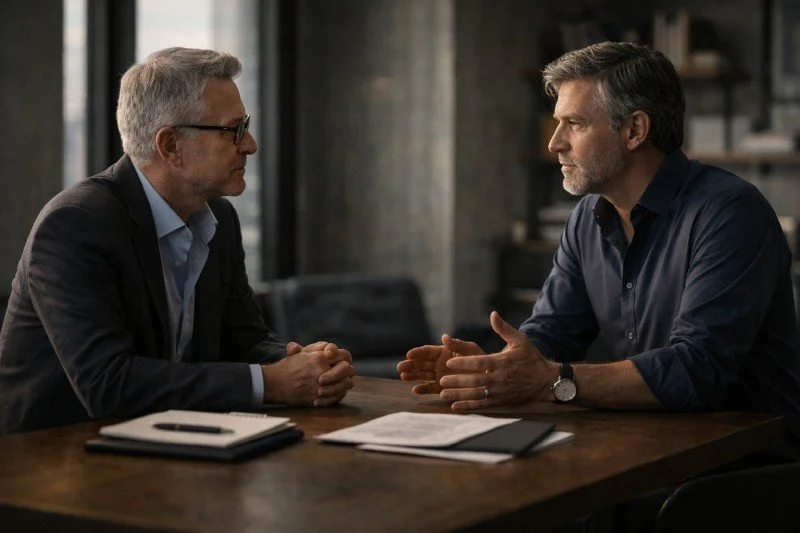
There's a specific kind of loneliness that comes with being the leader.
When you're small, you're in the trenches with everyone. You're doing the work. You understand what's happening because you're living it. But as you grow, you step back. You're no longer doing the work, you're orchestrating it. You're making decisions about things you're not directly involved in anymore.
And suddenly, there's nobody else at your level.
Your team looks to you for answers. They can't be your sounding board because they see you as the authority. They need you to be confident, to have direction, to know what's happening. They're not the right place to think through your doubts.
Your peers in other businesses might understand, but you're competing with them or you don't want to reveal too much about your situation.
Your family loves you, but they don't live in your world. They don't understand why a deal that "looks good" is actually risky. They don't understand the complexity of scaling. So even when they listen, they can't really help you think through it.
You're isolated at the top, making decisions that nobody else is equipped to understand.
And that's where most leaders get stuck.
What a Real Sounding Board Does
It's not advice-giving (though sometimes advice helps). It's not therapy (though it can feel therapeutic). It's not cheerleading (though it can be encouraging).
A real sounding board is someone who:
Understands your world. They've built businesses or scaled them. They understand growth, constraints, decision-making under uncertainty. They're not starting from zero trying to understand what you do.
Asks the right questions. Instead of telling you what to do, they help you think more clearly about what you're trying to accomplish. "What would change if you did that?" "What's actually stopping you?" "What's the real problem here?" Questions that clarify, not questions that confuse.
Knows when you're bullshitting yourself. You might come in convinced that you need to hire three people. A good sounding board might ask, "Are you sure? Or are you just overwhelmed right now and think more people will help?" They call you on it, but in a way that helps you see it too.
Keeps it confidential. You can think out loud. You can explore ideas that might sound stupid. You can talk about fears and doubts and half-baked plans. It doesn't leave the room. It doesn't get to your team or your competitors or your investors. You have space to think.
Has seen the pattern before. You think your problem is unique. Often it's not. A good sounding board has helped other builders, other tech founders, other leaders navigate similar territory. They can show you what's worked, what hasn't, and what the trap usually is.
That's the function. And it's incredibly valuable.
A Real Example: Seven Years of Thinking Together
I've been working with a builder for 7 years. Solid construction firm, good reputation, steady revenue, a team he trusts. Over that time, I've been his sounding board through multiple growth decisions.
One of the biggest was when he got offered a massive contract, could add 40% to his revenue. But it would require hiring more people, managing more complexity, taking on more risk.
He wanted it. But he was terrified. What if he loses quality? What if the market shifts and he's overextended? What if his key people leave under the pressure?
We spent time thinking through it. Not me convincing him to do it or not do it. Just thinking together. What would he actually need to make it work? Could he hire the right people? What would change in his operation? What's the real risk here, and is it worth it?
By the end, he was clear. He took the contract. And he built a structure to handle it, hired the right people, implemented better systems, grew without burning out.
But that's not the only decision we've worked through. Over 7 years, we've navigated hiring challenges, pricing decisions, team restructures, market shifts, and strategic pivots. Not all of them were easy calls. Some required him to lean into risk. Some required him to say no to opportunities. Some required him to make tough conversations with his team.
The thing that's changed is that he's not thinking about them alone anymore. He has someone to work through the complexity with. And because of that, his decisions are sharper. His team sees a leader who's confident but thoughtful, not someone just reacting to circumstances.
That's what 7 years of thinking partnership actually does.
The Value Nobody Talks About

Here's what I've noticed from working with leaders like my builder client over 7 years: the ones who scale best are the ones who have someone to think with.
Not a therapist. Not a mentor who's giving them wisdom. Someone at their level who understands their world, can challenge their thinking, and help them see what they're missing.
It changes decisions. It accelerates progress. It reduces the isolation.
And it's not a luxury. It's actually a necessary investment if you want to scale without losing your mind.
When my builder was faced with that 40% growth opportunity, thinking alone about it might have meant turning it down out of fear. Instead, because we had space to work through it together, he saw the real opportunity and built the structure to handle it safely.
But that's just one decision. Over 7 years, the cumulative impact is massive. Better hiring decisions. Clearer pricing strategy. The confidence to make tough calls with his team. A business that's grown sustainably instead of chaotically.
That's what consistent thinking partnership actually does. It's not one big moment. It's the compounding effect of making better decisions, one conversation at a time.
What To Do This Week
If you're a leader feeling isolated, think about who you have in your corner.
Not your team. Not your family. Someone who understands business, understands growth, understands the decisions you're making, and is equipped to help you think through them.
If you don't have that person, you should.
Here's what to look for:
Someone who's been where you are. Not necessarily in your industry, but at a similar level, making similar decisions. A tradie doesn't need a coach who's built tech companies, but they need a coach who understands scaling operations. A tech CEO doesn't need someone who's built construction firms, but they need someone who understands hypergrowth.
Someone you trust completely. The sounding board relationship only works if you can think out loud without it getting back to your team, your investors, your competitors, or anyone else. Confidentiality is non-negotiable.
Someone who will challenge you. Not someone who agrees with everything. Someone who will ask the hard questions and call you on your bullshit in a way that helps you see it.
Someone who has the time and focus for you. A busy mentor you can grab coffee with occasionally is better than nothing. But what you actually need is someone who's dedicated to thinking with you about your business, regularly, over time.
That's the function of a business coach. Not advice-giving. Not cheerleading. Thinking partnership.
Ready to Have Someone to Think With?
If you're scaling and you're feeling the weight of decisions without anyone to really think them through with, that's the exact problem the Mastering Business Expansion Program solves.
I work with tradies, tech founders, service business owners, corporate leaders, anyone at that stage where they've outgrown their current support system but they're not big enough for a board or a team of advisors.
Here's what our relationship looks like:
Fortnightly calls where we dig into what's actually happening in your business. Not surface-level check-ins. Real thinking partnership. We talk about the decisions you're facing, the constraints you're hitting, the growth you want to achieve. I ask questions that help you see what you're missing. I share what I've seen in other businesses. We figure it out together.
Between calls, you have access to me. Something comes up that you need to think through? Text or voice message. It's part of the relationship.
And over time, the decisions get clearer. The isolation decreases. You've got someone in your corner who understands your world and can help you navigate it.
Your first session is free. We'll map out where you are, what you're trying to achieve, and whether this relationship would actually be valuable for you.
If you're at that point where you need someone to think with, not tell you what to do, but actually think with you, let's talk.